


Bradinn
The View from the Cheap Seats
by , 06-14-2026 at 10:05 AM (546 Views)
The View from The Cheap Seats
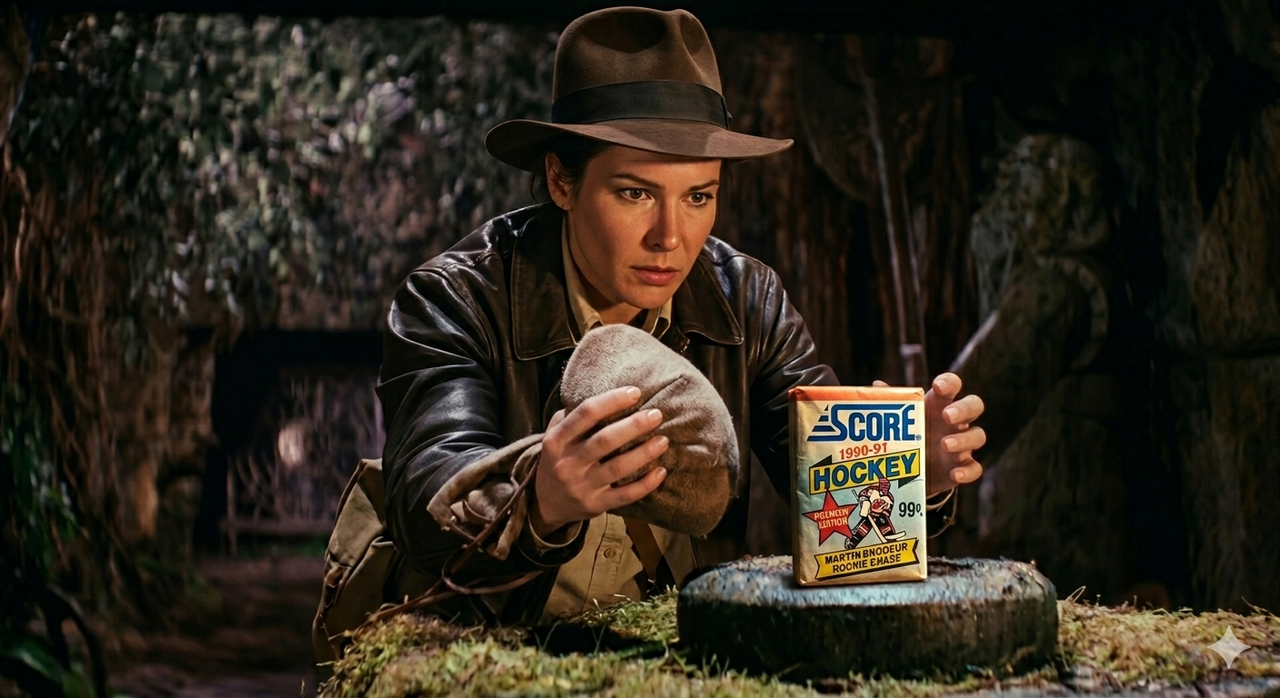
There is a specific kind of magic that exists in the crinkle of a silver foil pack from the early 1990s. For me, that magic started with a pack of 1990-91 Score Hockey. I can still recall the thrill of tearing open those wrappers, shuffling through the bright borders, and immediately plotting which duplicates I could swap with friends the next day at school. Shortly after came 1991-92 Pro Set—overproduced, flawed, and absolutely beautiful to a kid building a universe out of cardboard.
Decades later, I am still trying to complete that original Score set. I know what you’re thinking: You could go online and buy a complete factory set right now for the price of a fast-food combo. But where is the fun in that? Instead, I’m doing it the hard way, adding a few cards at a time to augment my original stash. The joy isn't in owning the set; it’s in the slow, deliberate act of finishing what I started.
The Great In-Between and the "Hits" Revolution
Like many collectors, my timeline has a few gaps. Around 1998, life got in the way and I stopped collecting for a bit. Well, mostly. No Canadian hockey fan could entirely resist the annual siren song of the McDonald’s hockey card sets.
By 2008, the itch returned. I started picking up the odd blaster box at retail stores and decided I wanted to focus my energy on collecting one of the greatest netminders to ever play the game: Patrick Roy. Eager to see what the modern hobby looked like, I stumbled upon the Sports Card Forum (SCF). That was my true introduction to the reality of the "Junk Wax" era. I quickly learned that the beloved 90s cards of my youth were so heavily overprinted they were worth barely ten cents a pop. Around the same time, we all realized that Beckett pricing guide magazines had become completely detached from reality; if you were buying cards in the real world, you were paying a quarter or less of whatever Beckett listed.
But the hobby was evolving, and it was intoxicating. I soon discovered that "hobby boxes" offered guaranteed "hits"—autographs, jersey patches, and short-printed rookies. The cards themselves had transformed into literal pieces of art. From the retro-cool aesthetic of Beehive to the sleek acetate of Upper Deck Ice, the premium feel of Artifacts, and the multi-layered sparkle of Black Diamond, I was hooked.
My maildays became a rotating gallery of elite goaltending. Alongside Roy, I seriously began collecting two other titans of the crease: Martin Brodeur and Roberto Luongo. For the next four years, life was a blur of busting hobby boxes and trading aggressively on SCF. When Panini entered the hockey market, it felt like a golden era. The competition brought fresh designs, innovative inserts, and a variety the hobby desperately needed.
The Escalation and the Sticker Shock
But good times in this hobby rarely stay cheap. As the years progressed toward 2012 and beyond, box prices began a steady, creeping climb. The budget had to be tightened, the spending limited. By 2015, I looked at the shifting landscape and told myself, “I’m done.”
For the next decade, I lived on the periphery. I’d grab the occasional Tim Hortons packs in the fall because the nostalgia was too pure to ignore, and I frequently loved just pulling out my binders, flipping through the pages, and looking at the incredible cards I had managed to acquire. The love for the hobby never died, but the connection to the modern market did.
Ten years after stepping away, I decided it was time to dip my toes back in. I walked into a local card shop expecting to find the hobby I left behind. Instead, I got a massive dose of sticker shock.
Hobby boxes that used to be a fun Friday night entertainment option suddenly commanded north of $300. Individual cards in the showcase weren’t being priced with the old "real-world quarter-discount" rule—they were being slapped with top-end Beckett and eBay maximum values. The hobby had transitioned from a collector's paradise to an alternative asset class for high-rollers and flippers.
Returning to the Roots
I retreated back to the familiar digital walls of the Sports Card Forum to re-strategize. Reality set in quickly: I could no longer afford to actively chase Patrick Roy's scarcer cards. So, I pivoted and shifted my focus back to Martin Brodeur.
Currently, I am exactly 60 cards away from hitting the 1,000-card milestone for my Brodeur collection. In the grand scheme of a legendary goaltender who has thousands of unique cards stretching across four decades, I know 1,000 cards means I still have a long, long way to go. But that milestone feels like a mountain worth climbing.
The strategy has just changed. My days of buying hobby boxes are officially over—the math simply doesn't make sense anymore. Frankly, if I walked into a casino and bet a few hundred dollars on red, I’d probably get a better return on investment, which I could then use to just buy a decent, guaranteed Brodeur single.
Instead, I watch eBay like a hawk, waiting for that rare, under-the-radar card to squeak through at a price point that doesn't break the bank. I keep posting, asking, and bumping threads on SCF, relying on the community of grassroots collectors who still remember what it's like to trade for the fun of it.
The high-end autographs, the flawless patch cards, and the low-numbered serials seem like they belong to a different world now, far out of my price range. But I don't begrudge the people buying those $300 hobby boxes or chasing those massive hits. The hobby has room for all of us, whether you're ripping premium wax or hunting down singles. At the end of the day, my only hope is that thirty years from now, today's young collectors are still just as deeply on the hunt as I am—regardless of what they paid for their packs.
Because as I sit here looking at a few modest cards arriving in white envelopes via standard mail, I realize something important. The view from the cheap seats might not have the glitz and glamour of the high-stakes breakers and the pristine graded slabs. But the nostalgia? The thrill of the hunt?
That still tastes just as good as it did in 1990.

 Go to Profile
 Mark as Read


